OCC rejects Bunq's US bank charter, closing the door on a neobank land grab
The OCC denied Dutch neobank Bunq's application for a US national bank charter, citing significant gaps. The decision redraws the map for foreign fintechs seeking a US footing.
The US charter door just closed on one of Europe's most talked-about neobanks. The Office of the Comptroller of the Currency denied Bunq's application for a national bank charter, with Reuters reporting the regulator pointed to 'significant' gaps in the application. The decision, confirmed across Bloomberg and law360, is the clearest signal this year that US banking licenses remain a fortress, not a formality, for foreign-led fintechs.
What the OCC actually said
The rejection was not a polite stall. law360 described the OCC denial as turning on 'significant' gaps, language that suggests substance rather than timing. Bunq, a Dutch challenger bank with more than nine million users across Europe, had sought a national charter to serve US customers directly rather than through a partner bank. The OCC's move echoes its pattern of scrutinizing applicants whose operations, governance, or US footprint do not yet match the expectations applied to domestic incumbents.
This is not the first time a foreign digital bank has hit the wall. Banking Dive reported that Nubank, the Brazilian neobank, applied for a US banking charter in late 2025, a reminder that the queue of international players wanting a US licence is long and the approval rate is thin. Bunq had previously withdrawn an earlier US charter bid in 2024 before refiling, so this denial lands after a deliberate, repeated attempt.
- OCC denied the charter citing 'significant' gaps
- Bunq is a Dutch neobank with nine million plus European users
- The firm had withdrawn and refiled after a 2024 attempt
- Foreign fintechs still face a thin approval rate for US charters
The APAC read on the decision
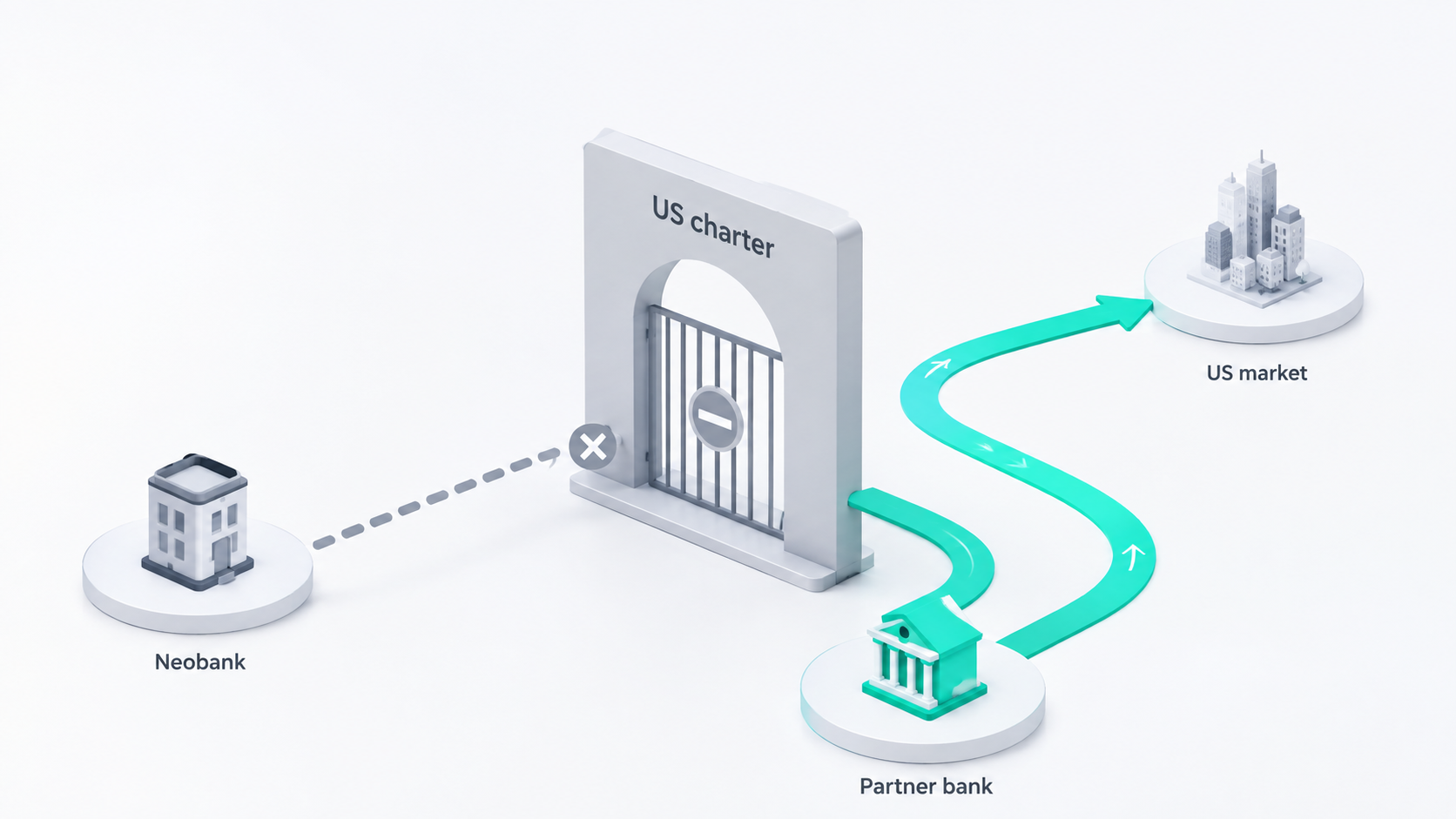
For operators in Southeast Asia and South Korea, the Bunq outcome is a useful mirror. Regional fintechs that assume a Western charter is the fast lane to credibility should note that US regulators treat foreign applicants with extra distance. The more reliable path for an APAC fintech entering the US has been a partner-bank model or an acquisition, not a de novo charter. The same logic applies in reverse: US and European fintechs eyeing Singapore or Jakarta will find local licensing faster, but still gated by substance.
Charter versus partnership
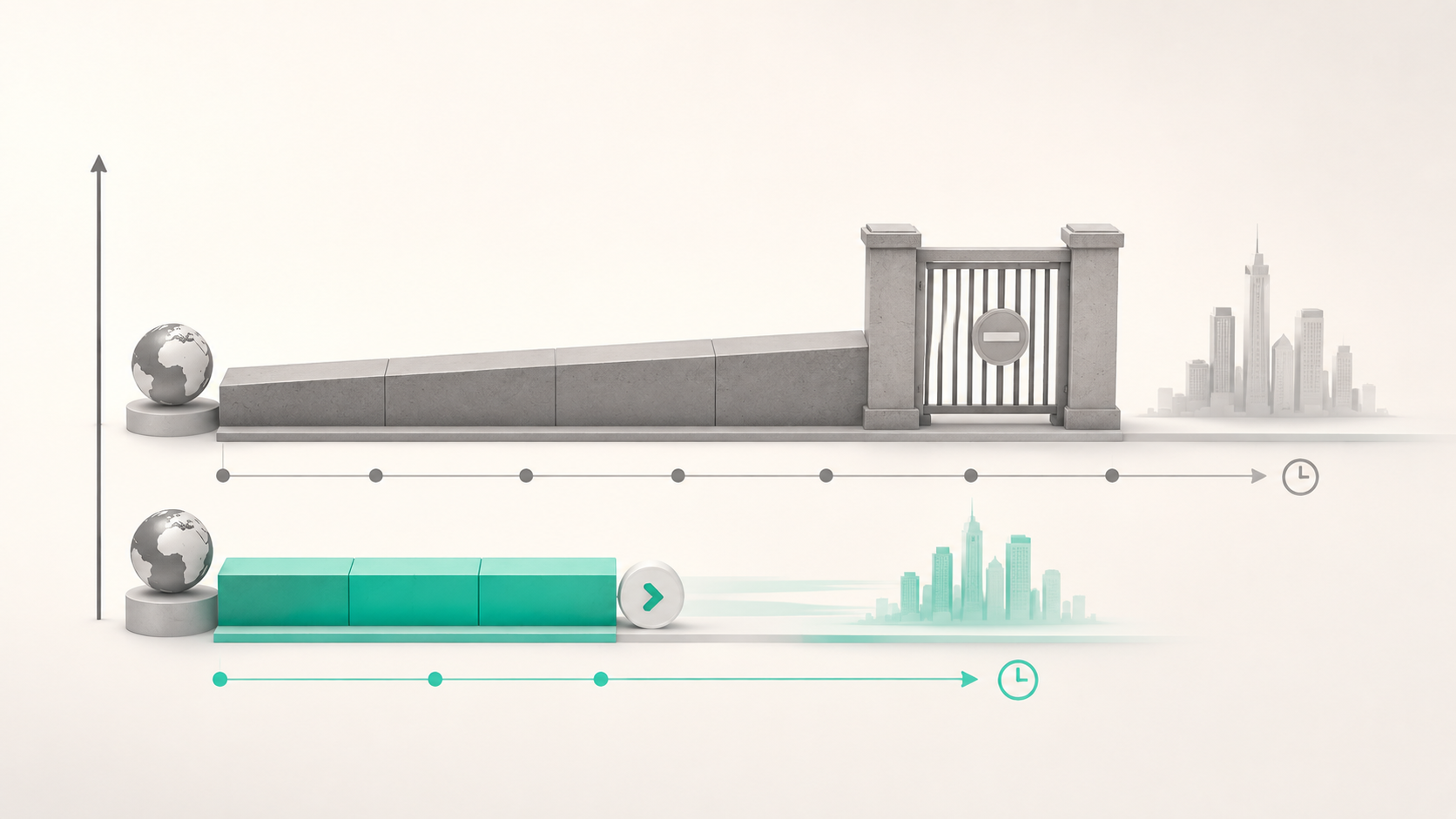
A charter gives a fintech control of its own balance sheet and direct regulatory standing. A partnership gives speed and avoids the multi-year charter fight, at the cost of margin and oversight dependency. Bunq's denial underscores that the charter premium is only worth pursuing once the US operating model is already proven. For most APAC growth-stage firms, a licensing or partnership route in a friendly Asian jurisdiction remains the smarter first move, with the US charter held as a later milestone.
US banking licences remain a fortress, not a formality, for foreign-led fintechs.
What this means for operators
The lesson is not that the US is closed. It is that the charter route rewards incumbents and proven domestic footprints, and punishes ambition without local substance. Fintechs should model their US entry on partnership and acquisition assumptions, and treat a charter as a multi-year strategic option rather than a launch requirement. Our Market Authority desk tracks these rulings as leading indicators of where the next gate will appear.
For regulators and ecosystem builders in Asia, the episode is a quiet advantage. If the US makes foreign entry this hard, Singapore, Hong Kong, and Seoul become relatively more attractive as the place to prove a global fintech model first. The firms that read Bunq's rejection as a map, not a warning, will route their expansion through the open gates.
Did the OCC reject Bunq for being foreign?
Not explicitly. The stated reason was 'significant' gaps in the application, though foreign applicants historically face a higher bar for US charters.
Can Bunq still serve US customers?
Yes, through a partner-bank model or future reapplication, but not as a direct national bank until it clears the charter standard.
Bunq's denial is a single ruling with a wide shadow. It tells every foreign fintech with US dreams that the charter is earned through local substance, not claimed through brand momentum. The smart response is to build the footprint that makes the next application unavoidable to approve, and to use the partner route to prove the model in the meantime.
Speak with the SpinDepth desk