
Why Thailand's virtual banks took so long to arrive
Thailand's virtual banks were approved in June 2025 with launches due in 2026, a slow, phased path shaped by a cautious regulator, a high capital floor, and sandbox safeguards.
Thailand's virtual banks were not approved quickly. The Bank of Thailand opened applications in March 2024, closed them in September 2024, and only announced the three winners in June 2025, with operations required by 2026. Measured against the speed at which fintech moves, that is a long road. But the slowness is the design. The regulator chose a cautious, phased path on purpose, trading speed for depositor protection. The full structure of the approval is in our Thailand virtual bank licence winners breakdown.
The timeline, step by step
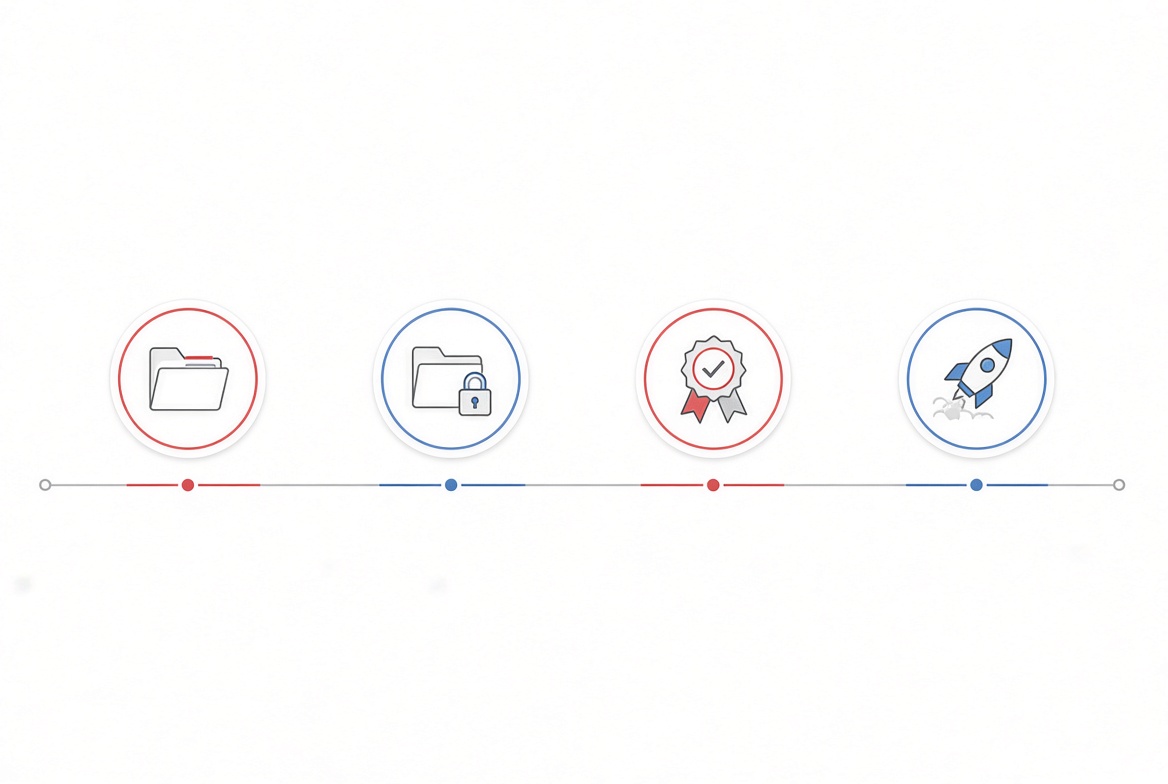
The process ran in clear stages. Applications opened on 5 March 2024. The window closed on 23 September 2024, after five consortium-led applicants filed. The Bank of Thailand then ran a months-long review, and the Minister of Finance approved the three successful applicants on 19 June 2025. Operations are required to begin by 2026. That is roughly two years from open application to live bank, a pace set by regulatory review, not by applicant readiness.
Why the Bank of Thailand moved cautiously
Virtual banks hold customer deposits, so a failure is a depositor-protection problem, not just a fintech failure. The Bank of Thailand has been explicit that inclusion cannot come at the cost of stability, and that framing shaped every stage of the process. A slow review lets the regulator scrutinise each consortium's capital plan, technology stack, and risk controls before a licence is granted. The same caution explains the high bar for who got a licence, which we detail in the Thailand virtual bank licence winners article.
- Applications opened March 2024, closed September 2024
- Minister of Finance approved three winners June 2025
- Launch required by 2026, about two years end to end
- Review prioritised depositor protection over speed
The 5 billion baht capital floor
One concrete reason for the deliberate pace is the 5 billion baht capital floor attached to the first cohort. The Bank of Thailand set that floor so the new banks hold enough capital to absorb early losses while they build a loan book from thin-file customers, a segment that is profitable only at scale. A high floor filters out undercapitalised entrants and forces each winner to prove it can survive the loss-making launch phase. Capital is the first safeguard, and the delay is partly the time it takes to verify each applicant can meet it. The trade-off is discussed in our piece on what Thailand's virtual banks actually are, because the model only works with that buffer behind it.
The delay is not drift. It is the time the regulator priced into protecting depositors.
Sandbox and phased launch
Beyond capital, the Bank of Thailand is expected to run the first cohort inside a supervised sandbox, limiting product scope and customer volume until the banks prove their risk controls. A phased launch means the banks do not open the floodgates on day one. They prove the underwriting on a smaller book, then expand. That is another reason the public launch lands in 2026 rather than immediately after approval. The sandbox is the second safeguard, and it is why the delay should be read as sequencing, not stalling. The Ascend Bank market piece shows how one winner is positioning for exactly this phased entry.
How this compares with the region
Thailand's pace looks slow next to markets that moved faster, but the comparison is not apples to apples. Singapore awarded digital bank licences in 2020 and launched in 2022, but it ran a different model with different safeguards, as our Thailand versus Singapore digital banking comparison explains. Malaysia and Hong Kong took their own paths. Thailand deliberately chose the cautious end of the spectrum because its priority is inclusion without depositor risk, and a slower licence process is the cheapest way to buy that safety. The regional lesson is that virtual bank timing tracks regulator appetite for risk, not market demand.
What operators should watch
For any operator planning a Thailand virtual bank entry or partnership, the timeline is the lesson: budget for a multi-year regulatory journey, not a quick launch. The winners earned their positions by pairing distribution with capital strength, and the next cohort, if the Bank of Thailand opens one, will face the same bar. The practical move is to build the compliance and capital case alongside the product, because the product is the easy part. The question of whether the banks then reach the underserved or compete for the already-banked is covered in our article on virtual banks serving underserved consumers in Thailand.
The bigger picture
A delayed launch is not a failed one. Thailand is choosing to get virtual banking right rather than first, and the cautious design protects the exact people the model is meant to help: if a virtual bank fails fast and loose, the depositor who loses out is the thin-file customer the whole scheme exists to serve. The two-year path is the price of that protection. If the first three launch cleanly in 2026, the slowness will look like prudence. If they launch recklessly, no one will remember the speed.
What to watch next
The signals to track are the named virtual bank brands, their 2026 launch dates, and the first product scope each reveals from the sandbox. A deposits-first launch signals caution; a credit-first launch signals confidence in the underwriting engine. Either way, the sequence tells you how the Bank of Thailand is balancing inclusion against stability in practice.
When do Thailand's virtual banks launch?
The three approved virtual banks are required to begin operations by 2026. The Bank of Thailand approved the winners in June 2025 after a licensing process that opened in March 2024.
Why the long delay?
The delay reflects a deliberate, cautious regulator. The Bank of Thailand prioritised depositor protection through a long review, a 5 billion baht capital floor, and a phased sandbox launch over a fast approval.