XTB's FC Porto play shows the sponsorship map for finance brands
XTB just became FC Porto's Official Investment Partner through 2028/29, chasing European and MENA reach. The same playbook is open to APAC finance and crypto brands, and SpinDepth can broker it.
FC Porto did not pick a bank. On Friday the club confirmed a three-year partnership with XTB, the Poland-founded investment platform, naming it Official Investment Partner through the end of the 2028/29 season. XTB takes a sleeve position on the men's first-team shirt from 2026/27, plus pitch-side and stadium video-wall visibility at Estádio do Dragão. For a club of Porto's pedigree, the partner is notable less for the logo than for what the logo is selling: retail investing, to a fan base that spans Portugal, Brazil, and the Lusophone and MENA corridors XTB is actively courting.
Why a Portuguese giant is the right chassis for a finance brand
Porto is not the largest club in Europe by revenue, but it is one of the most efficient carriers of soft power. Twenty-nine Primeira Liga titles and two European Cups buy credibility that a paid media campaign cannot. More importantly for a financial brand, Porto travels. The Portuguese language connects the club to Brazil's 215 million people and to diaspora communities across Europe, Africa, and pockets of Asia. A sleeve on a Porto shirt is, in practice, a recurring impression in markets where trust in local financial institutions is still being built.
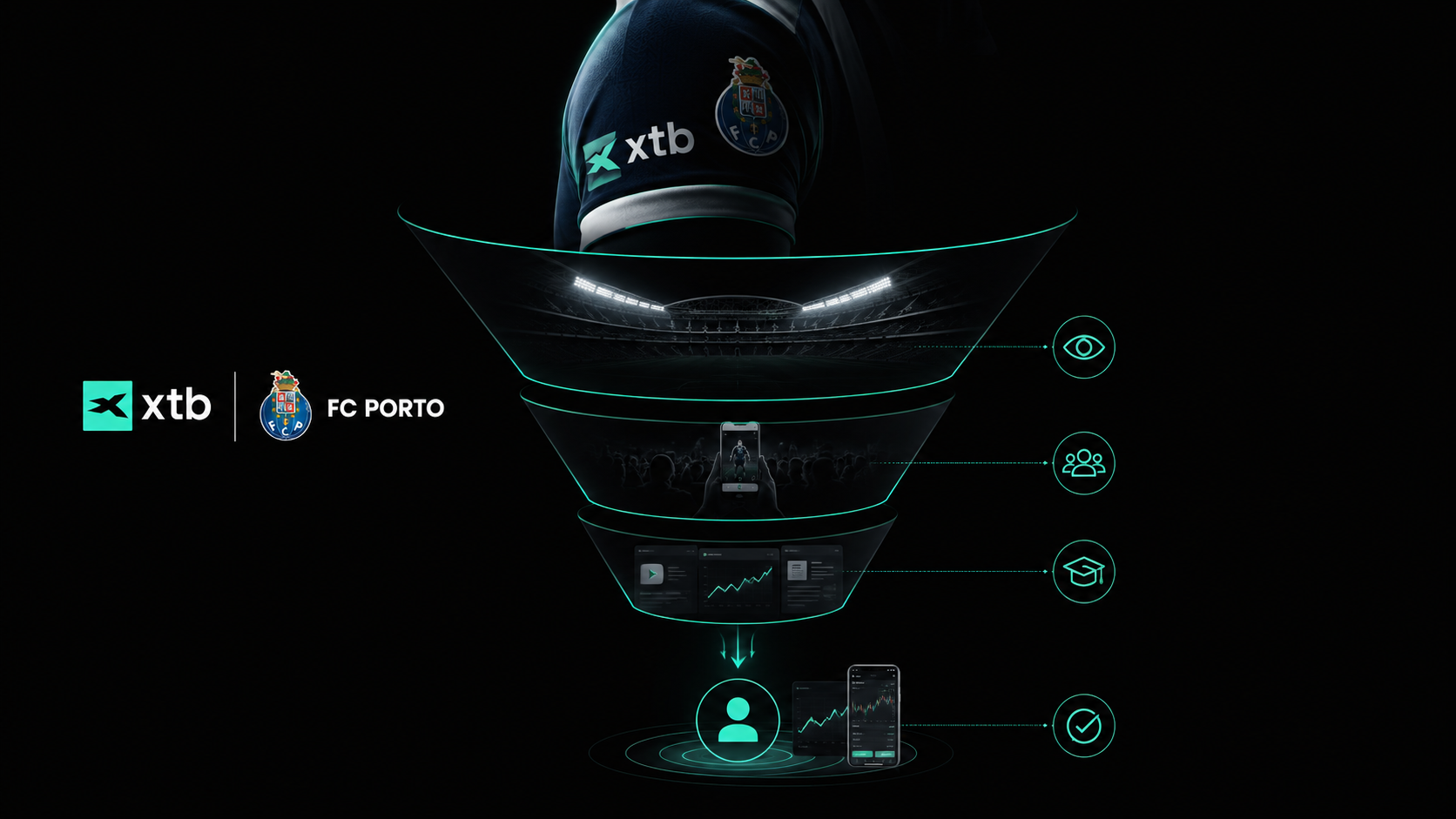
XTB's own footprint explains the fit. The company lists localized operations across more than 20 markets including Portugal, Spain, and a growing set of Asian and MENA jurisdictions. A club partnership lets it plant a familiar mark in front of prospective retail investors without the friction of cold acquisition. The stated aim, repeated across the club and company announcements, is to make investing feel accessible and to wrap it in 'financial education' for fans. The sleeve is the hook; the education content is the funnel.
- Credibility transfer: a two-time European champion lends institutional weight to a retail platform.
- Geographic reach: Lusophone and diaspora audiences across Europe, Brazil, Africa, and Asia.
- Media multiplier: shirt, pitch-side, and stadium screens compound across domestic and European fixtures.
- Funnel design: the partnership brands the sport, then routes fans to education and onboarding.
This is a repeatable model, not a one-off trophy deal
XTB is running a portfolio, not a single swing. Earlier in 2026 the firm signed a multi-year deal with SSC Napoli and a partnership with FIBA, the international basketball federation. Its marketing spend reached PLN 435.5 million in the first half of 2026, a figure that signals sports rights are now a structural line item rather than a campaign. When a brand treats club partnerships as a portfolio, each deal is a node in a network that covers different leagues, languages, and regulatory zones.
That is the part APAC operators should file away. The logic Porto satisfies for XTB, a club in the right league with the right diaspora, can be satisfied by clubs across Southeast Asia, South Korea, and the Gulf. A Indonesian or Malaysian fintech does not need a European giant to reach its home market; it needs the club its customers already argue about on Monday morning. The brokerage work is matching brand objective to club audience, then structuring the rights so the logo actually drives accounts.
What a good rights package actually contains
The Porto deal is instructive because it is not just a logo. It bundles sleeve placement, pitch-side, stadium screens, and digital communications. For an APAC brand the equivalent package might swap the stadium for a league-wide social activation, or a jersey patch for a naming-rights tier in a regional competition. The variable is not the size of the club. It is the tightness between where the fans are and where the accounts are.
The sleeve is the hook; the education content is the funnel.
Where APAC finance and crypto brands fit the same map
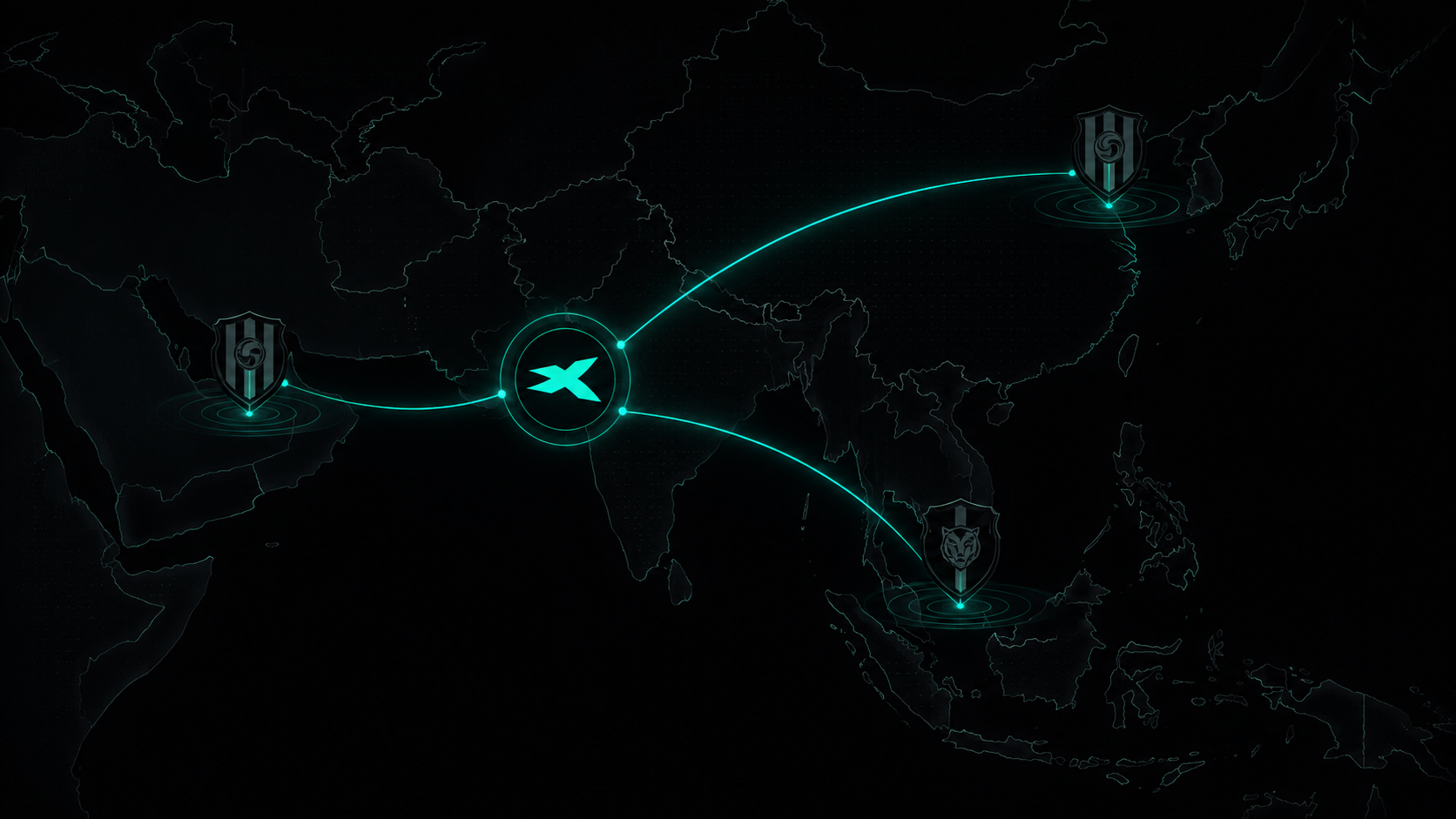
The regulatory texture differs by market, but the strategic shape is identical. A Singapore or Hong Kong headquartered exchange wants the same thing XTB wants from Porto: a trusted mark in front of high-intent, sports-literate consumers who are also prospective users. Southeast Asia's football cultures are fractured across leagues, which is an advantage for a broker. Fragmentation means no single club is prohibitively expensive, and a portfolio of mid-tier club deals can cover a region more cheaply than one marquee name.
South Korea adds a different lever. K-league clubs and national-team adjacencies carry intense local loyalty and clean brand environments, useful for a finance brand trying to look serious rather than speculative. The Gulf, where several APAC exchanges already hold licenses, offers clubs with continental broadcast reach and a permissive sponsorship climate for financial products. The asset class changes; the mechanics of credibility transfer do not.
How SpinDepth brokers the equivalent partnership
SpinDepth works the deal from the brand side, not the club side. That means we start with the operator's actual acquisition map: which markets, which regulators, which customer persona, and what a funded account is worth there. From that brief we identify candidate clubs and leagues whose audiences overlap the target, then we structure a rights package and negotiate it. The FC Porto and XTB agreement is a live template we can run against, including, where the fit is right, a direct approach to Porto itself or to comparably positioned European and Asian clubs.
The value is not access alone. It is the discipline to tie every right back to a measurable outcome, sleeve impressions to account openings, stadium screens to verified users, education content to retention. Most sponsorship spend leaks because the rights were bought before the funnel was drawn. We draw the funnel first, then buy the rights that fill it. For an APAC or MENA-focused finance or crypto brand, that is the difference between a logo on a shirt and a channel that pays for itself.
What this means for operators
If you run growth or brand for a finance or crypto business targeting APAC and the Lusophone or MENA corridors, treat club partnerships as infrastructure, not indulgence. The XTB-Porto deal shows a mid-prestige European club can serve a pan-regional acquisition strategy when the audience mapping is done first. Your version may be a K-league club, a Southeast Asian league tier, or Porto itself. The constant is that the partnership must be engineered around the customer, not around the trophy cabinet.
Can a crypto exchange legally sponsor a football club in APAC?
It depends on the jurisdiction. Singapore and Hong Kong permit licensed exchanges to advertise within guardrails, while other markets restrict or bar crypto promotion. The club and the league also impose their own standards. SpinDepth scopes the regulatory envelope before any approach is made.
Is a European club like FC Porto useful for an APAC-only brand?
Yes, where the brand targets diaspora or Lusophone audiences, or wants continental credibility that transfers to Asian broadcast and social channels. For a purely domestic Southeast Asian play, a regional club usually delivers better cost per qualified impression.
How long does a club partnership typically take to structure?
A sleeve or partner-tier deal can be scoped and negotiated within a season window, though marquee clubs and European cycles move on annual sales calendars. Starting from a clear acquisition brief shortens the process considerably.